Printing Services London, Ontario: Turnaround Times, Costs, and Quality Compared
London’s print economy is unusually diverse for a mid-sized city. There is the steady drumbeat of university course packs and orientation materials. There are seasonal surges tied to festivals and markets. Manufacturers in the east and south end need technical labels and packaging. New restaurants open with short notice and need menus, decals, and storefront signs the same week. That spread of demand has shaped how printing services in London, Ontario quote jobs, schedule presses, and set prices.
Anyone comparing vendors will quickly learn that the same piece can be produced three or four different ways, at different speeds and costs, with differences in colour and durability that only become obvious once the job is in hand. What follows is a field guide rooted in practical trade-offs: how long things actually take, what you should expect to pay in broad terms, and where quality differences hide.
What really controls turnaround time
Time starts before ink touches paper. The most common delays I see in London shops are not mechanical. They are file-related and scheduling-related. If your artwork arrives flattened, sized correctly, and with fonts outlined, press time is the easy part. If you need design help, image retouching, or a layout rescue, expect a day or two added, sometimes more if you are in a queue behind corporate orders.
Scheduling is a second lever. Local printers juggle same-day digital runs, weekly offset gang runs, and ongoing large-format signage. Presses run fastest when they can batch similar stocks and sizes. That is why you might get a better price and a slightly longer timeline if your brochures can ride along with a standard gang run. When a job requires dedicated setup, like spot colour offset or screen printing, the calendar matters more than the press speed.
Finishing often governs the final delivery window. Lamination needs to cure. UV ink generally can be handled quickly, but solvent prints off large-format machines may need a gassing-off period before lamination if outdoor durability matters. Bindery queues are very real in late August and early September when schools return. A simple trim can add an afternoon, but a saddle-stitched booklet with a matte lam cover can add two days.
Seasonality is not just about holidays. Spring brings building trades shows and city events. Early summer has an uptick in street banners and vendor signage. Late fall is when packaging and gift-box work ramps. If you plan around those cycles, you get better options without rush fees.
Typical timelines by service in London
Below is a compact overview I use when guiding clients. These are business-day ranges once print-ready files are approved. Rush service can shorten many of these windows, often with a surcharge.
| Service Type | Common Method | Typical Turnaround | Notes on Variability | | --- | --- | --- | --- | | Business cards, postcards, flyers | Digital toner or inkjet production | Same day to 2 days | Add 1 to 2 days for special laminates or foils | | Brochures, booklets (short runs) | Digital, inline or offline stitch | 2 to 4 days | Complex folds and heavy coverage extend drying time | | Brochures, booklets (1,000+ units) | Offset | 4 to 8 days | Proofing and setup time drive schedule | | Posters (large format) | Aqueous or latex wide-format | Same day to 2 days | Lamination adds 1 day | | Coroplast or PVC signs | Latex or UV flatbed | 2 to 4 days | Grommets, contour cuts add handling time | | Aluminum composite signs | UV flatbed + finishing | 3 to 6 days | Outdoor laminates and edge finishing can add a day | | Window, wall, and floor graphics | Latex/solvent + lamination | 3 to 7 days | Site measurements and install scheduling often the bottleneck | | Banners | Latex/UV with hem and grommet | 2 to 3 days | Rush next-day is common if stock is on hand | | Apparel, screen printing | Manual or automatic screen printing | 5 to 10 days | Pre-press screens and garment sourcing are key drivers | | Apparel, DTG or DTF transfers | Direct-to-garment or transfer | 2 to 5 days | Good for low quantities and fast turns | | Vehicle graphics and wraps | Cast vinyl + lamination | 5 to 15 days | Installation bay scheduling and curing times matter | | Promotional items (mugs, pens) | Pad print, UV, laser, sublimation | 7 to 14 days | Artwork proof approval often slows the start |
If you are searching specifically for screen printing London, Ontario vendors, budget closer to the mid-range in busy seasons. Shops will push fast DTG or transfers for micro-runs under a dozen garments because screens and setup time dominate in that case.
Price ranges you can bank on
Every print house will say “it depends,” and they are right. Still, there are sensible ranges that hold up across the city. All numbers below are rough Canadian dollar estimates, not quotes, and assume print-ready files.
Business cards on a 14 to 16 pt coated stock, full colour both sides: 250 cards at 45 to 85 dollars, 500 at 60 to 120, 1,000 at 90 to 160. Soft-touch or velvet laminate often adds 25 to 60 dollars per 500. Foil or spot UV will jump significantly because of extra passes or transfer films.
Postcards and rack cards: 500 at 100 to 180 dollars on standard stock. If mailed, factor in Canada Post prep and addressing, which can add 0.20 to 0.40 per piece plus a setup.
Flyers, 8.5 by 11, full colour, 100 lb text: 500 at 130 to 200 dollars digitally, 2,500 offset at 350 to 600. The crossover where offset beats digital in cost usually lands around 1,000 to 1,500 pieces, depending on coverage and finishing.
Booklets, 8 pages, 8.5 by 11 saddle-stitched: 250 at 450 to 800 dollars, 1,000 at 1,200 to 2,000. Heavy ink coverage or uncoated stocks can alter ink consumption and drying, which may force a different press profile and price.
Large posters, 24 by 36 on a premium photo paper: 30 to 60 dollars unlaminated. Mounted to foam board or gator board adds 20 to 40 dollars per poster. If you need it to survive a month in a storefront window, ask for a UV laminate and plan for an extra day and 10 to 20 dollars more.
Banners, 13 oz vinyl with hem and grommets: a 3 by 6 foot banner lands around 80 to 150 dollars. Heavier materials or double-sided prints climb by 30 to 60 percent.
Coroplast signs, 4 mm, single-sided: yard sign size 18 by 24 at 18 to 35 dollars each for 10 to 20 units. Full pallets for campaigns or developments can scale under 10 dollars each on high volumes, depending on ink https://shopartcal.com/ coverage and whether printing direct on a flatbed or applying printed vinyl.
Aluminum composite panel signs for exteriors: 24 by 36 at 120 to 220 dollars, 4 by 8 foot panels from 300 to 600 depending on laminate and mounting method. For long-term outdoor use, do not skip the cast overlaminate. It is a small percentage of the cost and protects ink and substrate from chalking and UV.
Window graphics: perforated window film installed often runs 10 to 18 dollars per square foot including print, laminate, and install. Interior wall murals with a matte, repositionable film are similar in print cost, while installation varies with wall prep and obstacles.
Apparel screen printing: the screen fees are the gating item. A one-colour front on 50 shirts, mid-weight cotton, might be 9 to 15 dollars per piece plus a setup of 25 to 40 dollars per screen and colour. A three-colour print on 12 shirts can be 18 to 30 dollars each because the setup is split across fewer pieces. For tiny runs, DTG or DTF transfers sidestep screens and land at 20 to 35 dollars per shirt, useful for photo elements or fast turns.
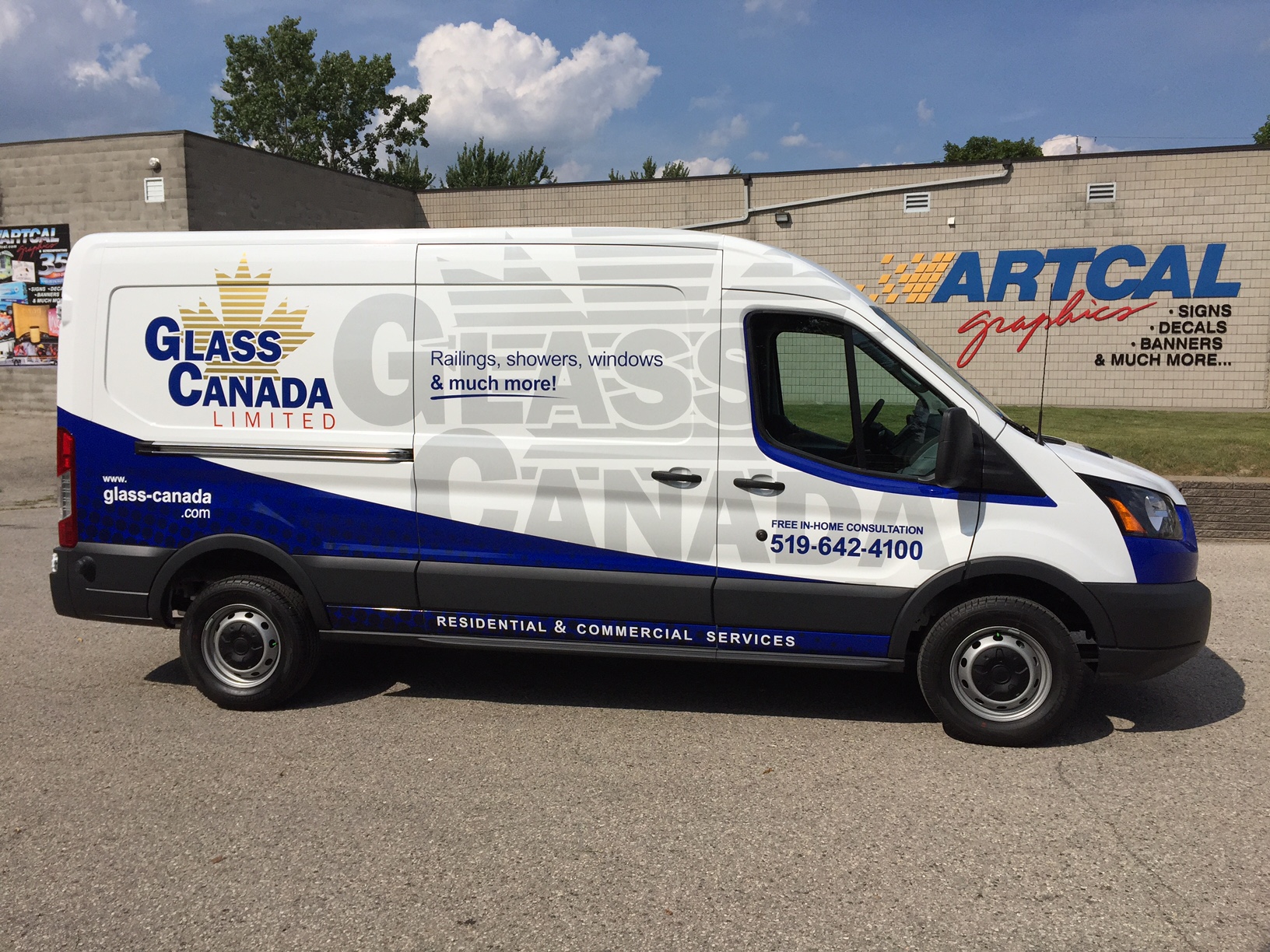
Vehicle graphics and partial wraps: simple door logos and USDOT-style numbering sit in the 150 to 350 dollar range installed. A partial wrap for a small SUV with quality cast vinyl and laminate can run 1,500 to 3,500. Full wraps on larger vehicles demand detailed quoting and a pre-inspection, with price driven by coverage, panel complexity, and shop scheduling.
Promotional items: mugs with dye-sublimation at 9 to 18 dollars each for 36 to 72 units. Pens with a single-colour pad print at 0.75 to 2.00 each in quantities of 250 plus. Items with handling labour like laser-engraved insulated bottles rise to 18 to 35 dollars each at 48 units.
These are not rock-bottom specials. They reflect pricing that balances speed, material quality, and professional finishing common to printing services London, Ontario wide.
Quality differences you can actually see
Everyone promises “high quality.” In print, that phrase hides specific choices that affect colour, sharpness, and longevity.
Colour consistency depends on calibration and workflow. If you are sensitive to brand colours, ask whether the shop runs ICC-managed profiles and what proofing options exist. A digital hard proof on the actual stock is the gold standard for colour-critical pieces. For offset, a press check can be worth the time if you are using spot colours or uncoated stocks that can mute saturation.
Substrate choice does more than change feel. A 16 pt coated card with a matte laminate looks elegant but can dull deep blacks if not profiled correctly. Uncoated text stock makes body copy comfortable to read but reduces contrast on photos. Coroplast is light and economical for events and temporary signs, but it will warp in sun if mounted poorly. Aluminum composite stays flat and resists denting, better for long-term storefront signage.
Ink and print method matter for durability. Eco-solvent inks need time to outgas before lamination, or you risk silvering under the film. UV inks cure instantly and bond well to rigid substrates, although they can be more brittle on flexible media. Latex inks have low odour, good indoor quality, and a strong showing outdoors once laminated.
Finishing elevates or undermines a piece. I have seen beautiful prints ruined by a rough trim and staples skewed by half a degree. Conversely, a modest postcard gains perceived value with a soft-touch laminate and a crisp corner radius. For signs London, Ontario businesses place in bright storefronts, an anti-glare matte laminate preserves legibility, especially on dark backgrounds.

If you are ordering apparel, the fabric blend impacts print hand and durability. Water-based screen inks feel soft but can be fussy on dark garments without an underbase. Plastisol sits on top and holds colour well. DTG looks best on high-cotton content garments. If you plan a reorder, ask the shop to record garment SKUs and ink mixes so repeat runs match.
Choosing the right method for the job
When time is tight and quantities are modest, digital wins. For 250 to 500 brochures needed by Thursday, a calibrated digital press can match brand colours well enough, especially if you commit to a stock the printer knows intimately. Once you cross 1,000 pieces and you have a week, offset gives you lower unit costs and smoother blends on large, flat colour areas.
For apparel and textiles, screen printing is the workhorse for runs of 25 or more, especially with simple graphics and one to three spot colours. It is fast on press once screens are burned, and per-unit pricing drops predictably. If you have a complex photo image or you only need five shirts for a pop-up, DTG or DTF saves setup time and avoids halftone compromises.
Signage and environmental graphics live in the large-format world. Temporary event signage favored by markets and campus groups leans on coroplast and simple vinyl banners, chosen for price and speed. Retailers commissioning permanent graphics in London should lean toward aluminum composite, cast-vinyl window films, and lamination suited to sun exposure along the main corridors. When in doubt, ask the shop for a small outdoor sample and leave it outside for a week. You will learn more from a scuffed corner and a week of UV than from a spec sheet.
How to compare vendors without wasting a week
Price is one line in the spreadsheet. You still need to understand what you are buying. The most productive vendor conversations start with a clear project brief and two or three focused questions that reveal process, not just promises.
- Ask for a printed sample on the exact stock or substrate, not a generic house sample, and inspect under neutral light.
- Ask what happens if a colour is off or a trim is out. Good shops have a defined recourse and timeline for reprints.
- Confirm the finishing in writing, including laminates, folds, binding, grommet placement, and install details.
- If colour fidelity is critical, ask about hard proofs, press checks, and how long approving those will add to the schedule.
- For installation work like window and wall graphics, ask who measures, who preps surfaces, and what warranty applies to both material and labour.
When you are sourcing signs London Ontario wide, be clear on whether your sign is temporary or permanent. Permanent exterior signage can trigger permits, engineered drawings, or landlord approvals. Printers and sign companies often help with that paperwork, but it does affect timelines.
Prepress details that keep you on schedule
Half of what people call “rush fees” are really “file rescue fees.” A clean handoff saves everyone time and preserves quality. If you only have the two minutes it takes to scan a checklist, hit the following and you will avoid most pitfalls.
- Set final size and bleed: 0.125 inch bleed on all sides is standard for small format, 0.25 inch or more for large-format items.
- Convert fonts to outlines and embed linked images at 300 dpi for print, 150 to 200 dpi at final size for large-format.
- Keep critical text at least 0.125 inch from trim on small pieces, at least 0.5 inch from the edge on large signs and banners.
- Supply vector artwork for logos and line art when possible, and specify Pantone spot colours if required for brand matches.
- Provide a single, flattened PDF per item with trim marks and bleed visible, and include a low-res proof for quick content checks.
If you are commissioning graphics London, Ontario designers know their local printers and preferred file profiles. Lean on that knowledge when possible, especially for colour-managed jobs or specialty finishes.
Real-world examples that illustrate the trade-offs
A restaurant launch on Richmond needed menus, a vinyl door logo, and a sidewalk sign in five days. We printed 250 menus digitally on a 100 lb silk cover for stiffness without cracking at the fold, plus a laminated 3 by 3 inch door decal. The A-frame sign used a 24 by 36 coroplast insert. Digital menus were done in 36 hours, coroplast the next day, and install took 30 minutes. Unit costs were a bit higher than if we had waited for offset, but meeting the opening date mattered more.
A charity fun run wanted 200 shirts with a two-colour design, plus route signs. Screen printing fit the shirts, with two screens and a white underbase on coloured garments. The setup took a day, printing took half a day. Coroplast route signs printed direct on a flatbed, grommeted for zip ties, delivered two days later. Total schedule ran 6 business days with no rush fees. Swapping to DTG for the shirts would have shaved a day but added cost and softened the colours.

A tech startup needed investor decks, business cards, and a 10 by 10 foot trade show backdrop with only a week’s notice. We advised digital for the decks and cards, and latex print with a blockout fabric for the backdrop. The crux was colour. We ran a hard proof on the specific fabric under 5000K lighting and adjusted the profile to keep a deep blue from clipping. Final delivery took 5 days. The blockout fabric saved the booth from light bleed at the venue, where overhead spots would have washed out thinner media.
Where signs and graphics meet the street
If you are new to commissioning storefront or interior signage, frame the job in terms of lifespan and exposure. For outdoor signs facing south or west along major roads, insist on cast vinyl and UV laminate over aluminum composite if you expect a multi-year life. For window graphics, perforated films are popular because they maintain daylight inside, but they mute colour compared to solid vinyl. A mix of solid logo marks and perf background often balances punch and interior light.
Retailers and campuses often want wall graphics that apply to painted drywall without damage. Choose a high-tack film for mild-texture walls, but test a sample. Paints with high VOC content or additives like stain blockers can repel adhesives. A quick adhesion test a day before install is not overkill. For floor graphics in high-traffic areas such as school hallways, the right anti-slip laminate is not negotiable. It is a safety item first, a branding surface second.
For temporary signage around London’s events calendar, keep things modular. Coroplast with slide-in hardware, banners with reusable frames, and magnetic vehicle decals reduce waste and let you refresh graphics with only the print cost next season.
How rush jobs really work
Rush capacity exists, but it is not magic. A printer can shuffle a job into an earlier slot or run after hours if materials are in stock and files are ready. The math is simple: a 25 to 50 percent surcharge often applies when you need same-day or next-day production with finishing. Installation windows are the bigger constraint. Skilled installers book out days to weeks. If you need a storefront install by Friday, call Monday and reserve the slot while your design is still in progress. It is easier to move an install back a day than to find one on 24 hours’ notice.
Delivery and courier choices are a final lever. Local couriers can shave a day compared to ground shipping for heavier signage or multiple boxes of brochures. Factor in packaging time for delicate finishes, which prevents scuffs and corner crush that undermine the print you just rushed.
Getting value from printing services London, Ontario wide
The best outcomes happen when you match the method to the moment. Urgent handouts for a campus talk belong on a digital press that can turn in hours. A season-long storefront sign deserves the materials and lamination that look as good in month nine as they did on install day. Apparel with a simple icon that repeats every quarter should live in screen printing screens you can reuse. One-off detailed art for a staff celebration is a DTG moment.
When you ask vendors to quote, be explicit about priorities in order. If colour fidelity is number one, state it. If the event date is fixed, say that and accept advice on stock or finish that can meet the calendar. In a city with as many capable shops as London, a clear brief frees the printer to recommend the most reliable path. Combine that with sharp files, realistic timelines, and a willingness to proof at the right points, and you will consistently get work that looks better than its price tag.
For those searching specific categories like printing services London, Ontario, screen printing London, Ontario, or graphics London, Ontario, use those phrases when you reach out. It helps route your inquiry to the right team inside a shop, whether that is small format digital, large-format signage, or apparel. The same company might do all three, but the specialists inside will ask different questions, catch different risks, and guide you to a smarter outcome.
Artcal Graphics & Printing — Business Info (NAP)
Name: Artcal Graphics & PrintingAddress: 779 Industrial Rd, London, ON N5V 3N5
Phone: +1519-453-6010
Website: https://www.artcal.com/
Hours:
Monday: 8:00 AM – 4:30 PM
Tuesday: 8:00 AM – 4:30 PM
Wednesday: 8:00 AM – 4:30 PM
Thursday: 8:00 AM – 4:30 PM
Friday: 8:00 AM – 4:30 PM
Saturday: Closed
Sunday: Closed
Open-location code (Plus Code): 2RGM+3R London, Ontario
Map/listing URL: https://www.google.com/maps/place/Artcal+Graphics+%26+Printing+Inc/@43.025226,-81.1680305,17z/data=!3m1!4b1!4m6!3m5!1s0x882eed2ae63a528d:0xc7068af2d391a354!8m2!3d43.025226!4d-81.1654556!16s%2Fg%2F1vm7c2pl?entry=ttu&g_ep=EgoyMDI2MDYwMS4wIKXMDSoASAFQAw%3D%3D
Embed iframe:
Socials (canonical https URLs):
Facebook: https://www.facebook.com/ArtcalGraphics
LinkedIn: https://www.linkedin.com/company/artcal-graphics-&-screenprinting-inc./
Instagram: https://www.instagram.com/artcalgraphics/
https://www.artcal.com/
Artcal Graphics & Printing provides signage and graphic design services for businesses and organizations in London, Ontario and surrounding areas.
If you need custom signs, printed graphics, or design support for marketing materials, the team can help you plan the right format and finish for your project.
Common requests include business signage, interior and exterior graphics, vehicle or window graphics, and printed items used for promotions and day-to-day operations.
Artcal Graphics & Printing serves London and nearby communities throughout Southwestern Ontario.
Hours listed are Monday–Friday 8:00 AM–4:30 PM, with Saturday and Sunday closed.
For directions and listing details, use the map listing: https://maps.app.goo.gl/A2EZfwDigfcN14zA8
To request pricing or share artwork details, call +1-519-453-6010 or use the contact options on https://www.artcal.com/.
Popular Questions About Artcal Graphics & Printing
What types of signage can a sign shop produce?Many sign shops handle items like storefront signs, window graphics, decals, banners, and other custom displays (options depend on materials and project needs).
Do I need a print-ready file to place an order?
Not always—some shops can help with design or preparing artwork, but it’s best to confirm file formats, sizing, and resolution requirements before production.
How long does a signage or print project take?
Turnaround varies based on the product type, quantity, and production schedule. Sharing your deadline early helps confirm timing.
What are the hours for Artcal Graphics & Printing?
Hours listed: Monday–Friday 8:00 AM–4:30 PM; Saturday closed; Sunday closed.
How can I contact Artcal Graphics & Printing?
Phone: +1-519-453-6010
Website: https://www.artcal.com/
Map: https://maps.app.goo.gl/A2EZfwDigfcN14zA8
Landmarks Near London, ON
1) Victoria Park2) Covent Garden Market
3) Budweiser Gardens
4) Western University
5) Fanshawe College
6) Springbank Park